Signature Power Pivot Machine
Why Standing Pulling Movements Matter More Than You Think
Most strength programs cover both vertical and horizontal pulling. What they miss is the standing pull a pattern that shows up in almost every athletic movement that matters. Blocking, tackling, wrestling, throwing, and changing direction against resistance. All of them require the ability to produce and transfer pulling force from a standing position through the hips into the ground.
Seated machines don't train that. Cable stacks get close, but they don't load progressively the way a plate-loaded lever does, and they don't give you a fixed base to brace against. The elitefts Signature Power Pivot Machine was built to fill that gap.
Train Both Sides Fix the Imbalances, Bilateral Work Hides
Bilateral pulling builds overall strength and lets you handle a greater total load. It has a place in any program. But bilateral work also lets the dominant side compensate. Over time, that compensation manifests as asymmetrical strength, movement dysfunction, and increased injury risk.
Unilateral training forces each side to handle its own load. No cheating. No shifting. The weaker side gets stronger because it has no choice. The Signature Power Pivot Machine handles both — load both arms for max effort bilateral work, or work one arm at a time for unilateral development, corrective loading, and sport-specific patterns that match real athletic demands.
Construction That Holds What You Put On It
-
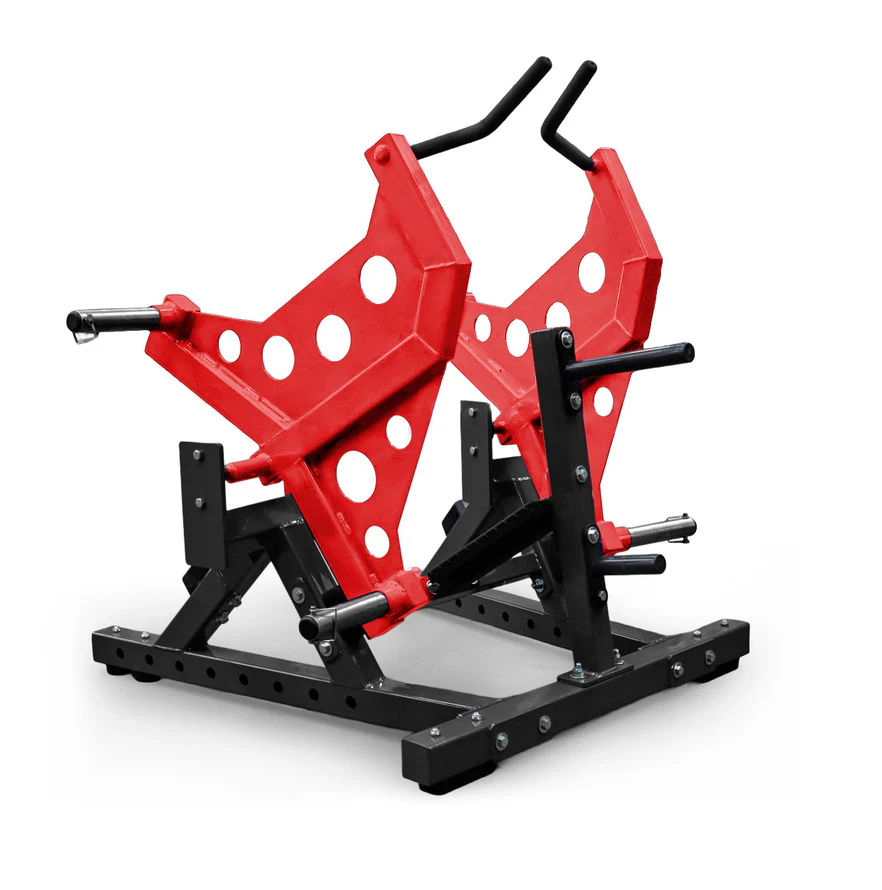
Frame: 3" x 3" 11-gauge and 2" x 3" 11-gauge steel — built to stay planted under heavy loading
-
Footprint: 42" W x 54" D x 53" T (56" W with weight horns extended)
-
Weight Horns: Stainless steel — one 12" horn with UHMW end cap and one 6" horn with UHMW end cap per side
-
Footplate: Checkered steel surface for secure bracing and ground-force drive during the pull
- Handles: Foam-covered stability handles built into the frame — stay in position through every rep
Who This Machine Is Built For
Sports performance programs at the high school, college, and professional level that want a plate-loaded pulling option, athletes can train standing. Strength coaches who work with multi-sport athletes need one machine that adapts to different pulling patterns without a cable stack. Serious private gyms where equipment is expected to outlast the athletes using it.
If you are building a program around true force production from the ground up, this machine belongs in it.
Frequently Asked Questions
Can this replace a cable machine for pulling work?
For standing pull patterns, yes, and plate-loaded progressive overload is more straightforward than managing cable stack increments. For seated pulling or overhead pulling, a cable option is still the right tool. These serve different patterns.
Is this better for bilateral or unilateral training?
It does both well. Most programs will use it bilaterally for heavier loading blocks and unilaterally for corrective work and sport-specific application. No adjustment required to switch between the two.
What floor space does this require?
The base footprint is 42" W x 54" D (56" W accounting for weight horns). Plan for additional clearance around the machine for athlete positioning.
Have questions before ordering? Call or email our team, we're lifters and coaches who can talk through your facility setup, loading requirements, and whether this machine fits your program.
Why Standing Pulling Movements Matter More Than You Think
Most strength programs cover both vertical and horizontal pulling. What they miss is the standing pull a pattern that shows up in almost every athletic movement that matters. Blocking, tackling, wrestling, throwing, and changing direction against resistance. All of them require the ability to produce and transfer pulling force from a standing position through the hips into the ground.
Seated machines don't train that. Cable stacks get close, but they don't load progressively the way a plate-loaded lever does, and they don't give you a fixed base to brace against. The elitefts Signature Power Pivot Machine was built to fill that gap.
Train Both Sides Fix the Imbalances, Bilateral Work Hides
Bilateral pulling builds overall strength and lets you handle a greater total load. It has a place in any program. But bilateral work also lets the dominant side compensate. Over time, that compensation manifests as asymmetrical strength, movement dysfunction, and increased injury risk.
Unilateral training forces each side to handle its own load. No cheating. No shifting. The weaker side gets stronger because it has no choice. The Signature Power Pivot Machine handles both — load both arms for max effort bilateral work, or work one arm at a time for unilateral development, corrective loading, and sport-specific patterns that match real athletic demands.
Construction That Holds What You Put On It
-
Frame: 3" x 3" 11-gauge and 2" x 3" 11-gauge steel — built to stay planted under heavy loading
-
Footprint: 42" W x 54" D x 53" T (56" W with weight horns extended)
-
Weight Horns: Stainless steel — one 12" horn with UHMW end cap and one 6" horn with UHMW end cap per side
-
Footplate: Checkered steel surface for secure bracing and ground-force drive during the pull
- Handles: Foam-covered stability handles built into the frame — stay in position through every rep
Who This Machine Is Built For
Sports performance programs at the high school, college, and professional level that want a plate-loaded pulling option, athletes can train standing. Strength coaches who work with multi-sport athletes need one machine that adapts to different pulling patterns without a cable stack. Serious private gyms where equipment is expected to outlast the athletes using it.
If you are building a program around true force production from the ground up, this machine belongs in it.
Frequently Asked Questions
Can this replace a cable machine for pulling work?
For standing pull patterns, yes, and plate-loaded progressive overload is more straightforward than managing cable stack increments. For seated pulling or overhead pulling, a cable option is still the right tool. These serve different patterns.
Is this better for bilateral or unilateral training?
It does both well. Most programs will use it bilaterally for heavier loading blocks and unilaterally for corrective work and sport-specific application. No adjustment required to switch between the two.
What floor space does this require?
The base footprint is 42" W x 54" D (56" W accounting for weight horns). Plan for additional clearance around the machine for athlete positioning.
Have questions before ordering? Call or email our team, we're lifters and coaches who can talk through your facility setup, loading requirements, and whether this machine fits your program.
Original: $3,463.90
-65%$3,463.90
$1,212.37Description
Why Standing Pulling Movements Matter More Than You Think
Most strength programs cover both vertical and horizontal pulling. What they miss is the standing pull a pattern that shows up in almost every athletic movement that matters. Blocking, tackling, wrestling, throwing, and changing direction against resistance. All of them require the ability to produce and transfer pulling force from a standing position through the hips into the ground.
Seated machines don't train that. Cable stacks get close, but they don't load progressively the way a plate-loaded lever does, and they don't give you a fixed base to brace against. The elitefts Signature Power Pivot Machine was built to fill that gap.
Train Both Sides Fix the Imbalances, Bilateral Work Hides
Bilateral pulling builds overall strength and lets you handle a greater total load. It has a place in any program. But bilateral work also lets the dominant side compensate. Over time, that compensation manifests as asymmetrical strength, movement dysfunction, and increased injury risk.
Unilateral training forces each side to handle its own load. No cheating. No shifting. The weaker side gets stronger because it has no choice. The Signature Power Pivot Machine handles both — load both arms for max effort bilateral work, or work one arm at a time for unilateral development, corrective loading, and sport-specific patterns that match real athletic demands.
Construction That Holds What You Put On It
-
Frame: 3" x 3" 11-gauge and 2" x 3" 11-gauge steel — built to stay planted under heavy loading
-
Footprint: 42" W x 54" D x 53" T (56" W with weight horns extended)
-
Weight Horns: Stainless steel — one 12" horn with UHMW end cap and one 6" horn with UHMW end cap per side
-
Footplate: Checkered steel surface for secure bracing and ground-force drive during the pull
- Handles: Foam-covered stability handles built into the frame — stay in position through every rep
Who This Machine Is Built For
Sports performance programs at the high school, college, and professional level that want a plate-loaded pulling option, athletes can train standing. Strength coaches who work with multi-sport athletes need one machine that adapts to different pulling patterns without a cable stack. Serious private gyms where equipment is expected to outlast the athletes using it.
If you are building a program around true force production from the ground up, this machine belongs in it.
Frequently Asked Questions
Can this replace a cable machine for pulling work?
For standing pull patterns, yes, and plate-loaded progressive overload is more straightforward than managing cable stack increments. For seated pulling or overhead pulling, a cable option is still the right tool. These serve different patterns.
Is this better for bilateral or unilateral training?
It does both well. Most programs will use it bilaterally for heavier loading blocks and unilaterally for corrective work and sport-specific application. No adjustment required to switch between the two.
What floor space does this require?
The base footprint is 42" W x 54" D (56" W accounting for weight horns). Plan for additional clearance around the machine for athlete positioning.
Have questions before ordering? Call or email our team, we're lifters and coaches who can talk through your facility setup, loading requirements, and whether this machine fits your program.