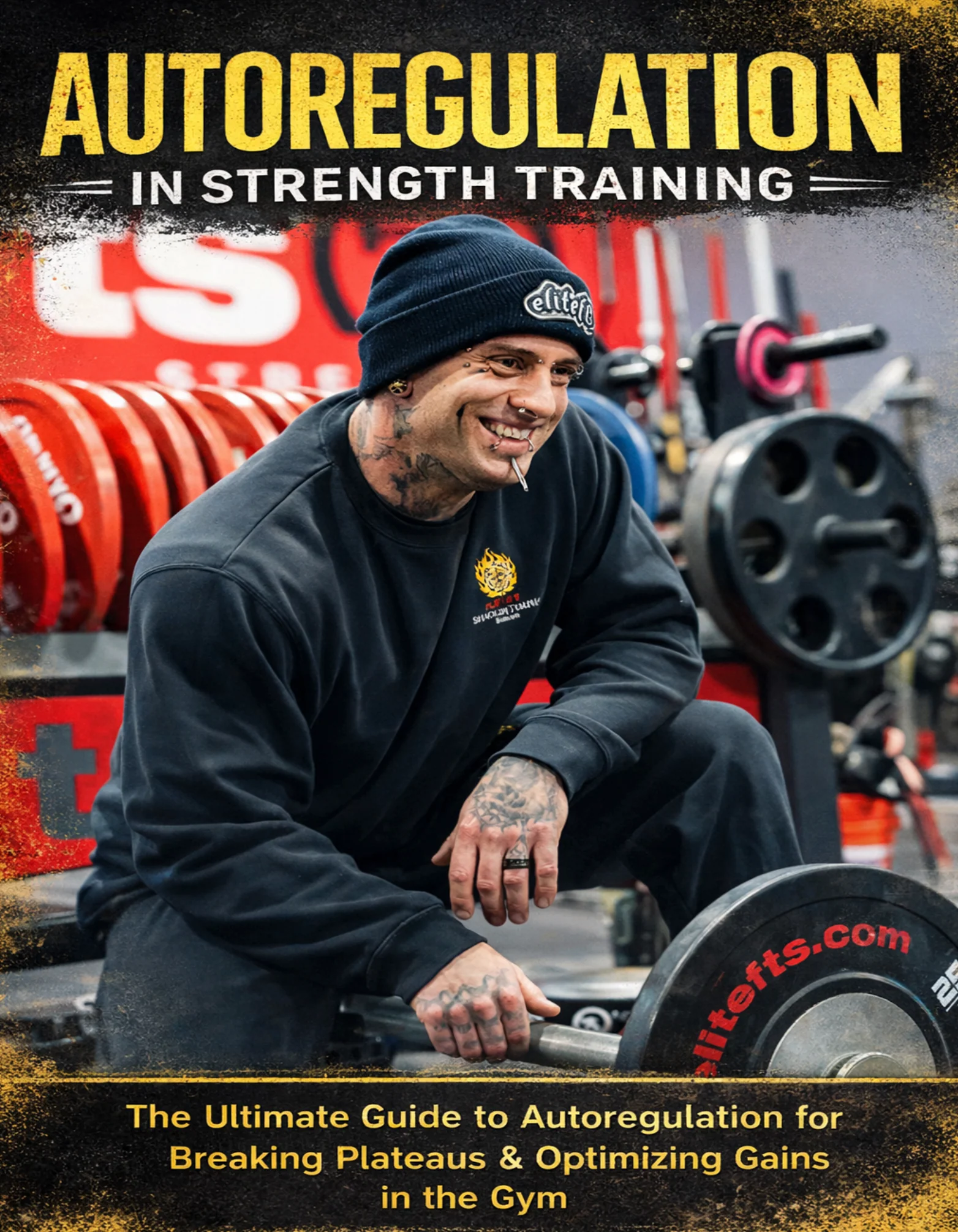
AUTOREGULATION STRENGTH TRAINING GUIDE (E-BOOK)
Stop Guessing. Start Training with Purpose.
Most lifters are told to “listen to their body.” That’s not enough. This guide gives you a clear system to know exactly how hard to train every session.
Understand What Drives Performance
Autoregulation is not about feelings. It’s about managing your nervous system so you can train hard, recover, and keep progressing.
You’ll learn how neurological fatigue impacts strength, focus, and recovery, and how hormones like cortisol and adrenaline affect your output in the gym.
The 7-Question Framework
This guide is built around seven simple questions you can use before every workout. In just minutes, you’ll know your readiness and how to adjust your training.
- Assess your neurological budget (sleep, stress, recovery)
- Identify fatigue levels before performance drops
- Use readiness indicators like HRV, grip strength, and power output
- Make smart adjustments without losing progress
Control the Variables That Matter
You’ll learn how to manage the three main drivers of training stress:
- Volume – total sets and reps
- Intensity – RPE and proximity to failure
- Load – percentage of your max
The key principle: keep one high, one medium, and one low to maintain sustainable progress.
Train Smarter in Every Phase
Whether your goal is size, strength, or both, this guide shows you what variable to protect and what to adjust. You’ll stay on track without burning out.
Make Adjustments Without Losing Progress
On tough days, small changes make a big difference:
- Increase rest periods to reduce stress
- Swap free weights for machines when needed
- Simplify your workout structure
- Manage psychological stress from difficult lifts
Built for Longevity
The strongest lifters aren’t the ones who push hardest every day. They’re the ones who train with awareness, adjust when needed, and stay consistent.
This is how you build real strength.
Live, Learn, Pass On.
Stop Guessing. Start Training with Purpose.
Most lifters are told to “listen to their body.” That’s not enough. This guide gives you a clear system to know exactly how hard to train every session.
Understand What Drives Performance
Autoregulation is not about feelings. It’s about managing your nervous system so you can train hard, recover, and keep progressing.
You’ll learn how neurological fatigue impacts strength, focus, and recovery, and how hormones like cortisol and adrenaline affect your output in the gym.
The 7-Question Framework
This guide is built around seven simple questions you can use before every workout. In just minutes, you’ll know your readiness and how to adjust your training.
- Assess your neurological budget (sleep, stress, recovery)
- Identify fatigue levels before performance drops
- Use readiness indicators like HRV, grip strength, and power output
- Make smart adjustments without losing progress
Control the Variables That Matter
You’ll learn how to manage the three main drivers of training stress:
- Volume – total sets and reps
- Intensity – RPE and proximity to failure
- Load – percentage of your max
The key principle: keep one high, one medium, and one low to maintain sustainable progress.
Train Smarter in Every Phase
Whether your goal is size, strength, or both, this guide shows you what variable to protect and what to adjust. You’ll stay on track without burning out.
Make Adjustments Without Losing Progress
On tough days, small changes make a big difference:
- Increase rest periods to reduce stress
- Swap free weights for machines when needed
- Simplify your workout structure
- Manage psychological stress from difficult lifts
Built for Longevity
The strongest lifters aren’t the ones who push hardest every day. They’re the ones who train with awareness, adjust when needed, and stay consistent.
This is how you build real strength.
Live, Learn, Pass On.
Original: $10.00
-65%$10.00
$3.50Description
Stop Guessing. Start Training with Purpose.
Most lifters are told to “listen to their body.” That’s not enough. This guide gives you a clear system to know exactly how hard to train every session.
Understand What Drives Performance
Autoregulation is not about feelings. It’s about managing your nervous system so you can train hard, recover, and keep progressing.
You’ll learn how neurological fatigue impacts strength, focus, and recovery, and how hormones like cortisol and adrenaline affect your output in the gym.
The 7-Question Framework
This guide is built around seven simple questions you can use before every workout. In just minutes, you’ll know your readiness and how to adjust your training.
- Assess your neurological budget (sleep, stress, recovery)
- Identify fatigue levels before performance drops
- Use readiness indicators like HRV, grip strength, and power output
- Make smart adjustments without losing progress
Control the Variables That Matter
You’ll learn how to manage the three main drivers of training stress:
- Volume – total sets and reps
- Intensity – RPE and proximity to failure
- Load – percentage of your max
The key principle: keep one high, one medium, and one low to maintain sustainable progress.
Train Smarter in Every Phase
Whether your goal is size, strength, or both, this guide shows you what variable to protect and what to adjust. You’ll stay on track without burning out.
Make Adjustments Without Losing Progress
On tough days, small changes make a big difference:
- Increase rest periods to reduce stress
- Swap free weights for machines when needed
- Simplify your workout structure
- Manage psychological stress from difficult lifts
Built for Longevity
The strongest lifters aren’t the ones who push hardest every day. They’re the ones who train with awareness, adjust when needed, and stay consistent.
This is how you build real strength.
Live, Learn, Pass On.